











































































































































































































































































































































































































































































































































































































































































































Jonathan Anderson Dior: Continuity Without Noise

Jonathan Anderson Dior marks a shift that feels less like a dramatic takeover and more like a careful recalibration. Rather than rewriting the house’s identity, Anderson approaches Dior with curiosity and restraint, allowing its heritage to breathe instead of hardening into repetition. The result is not a loud reinvention, but a subtle repositioning that feels intelligent, modern, and quietly confident.
From the outset, Anderson’s work at Dior signals an understanding that legacy is not something to be preserved in glass. Instead, it is something to be used, questioned, and gently redirected. Familiar Dior codes remain present, yet they no longer feel rigid. Tailoring softens without losing structure, elegance loosens without collapsing into chaos, and historical references appear with a sense of play rather than reverence.
Read Also: Jonathan Anderson’s Spring-Summer 2026 collection explores Dior’s heritage
Importantly, this approach reframes continuity as an active process. Dior does not stand still under Anderson; it moves carefully forward.
Restraint as a Creative Strategy
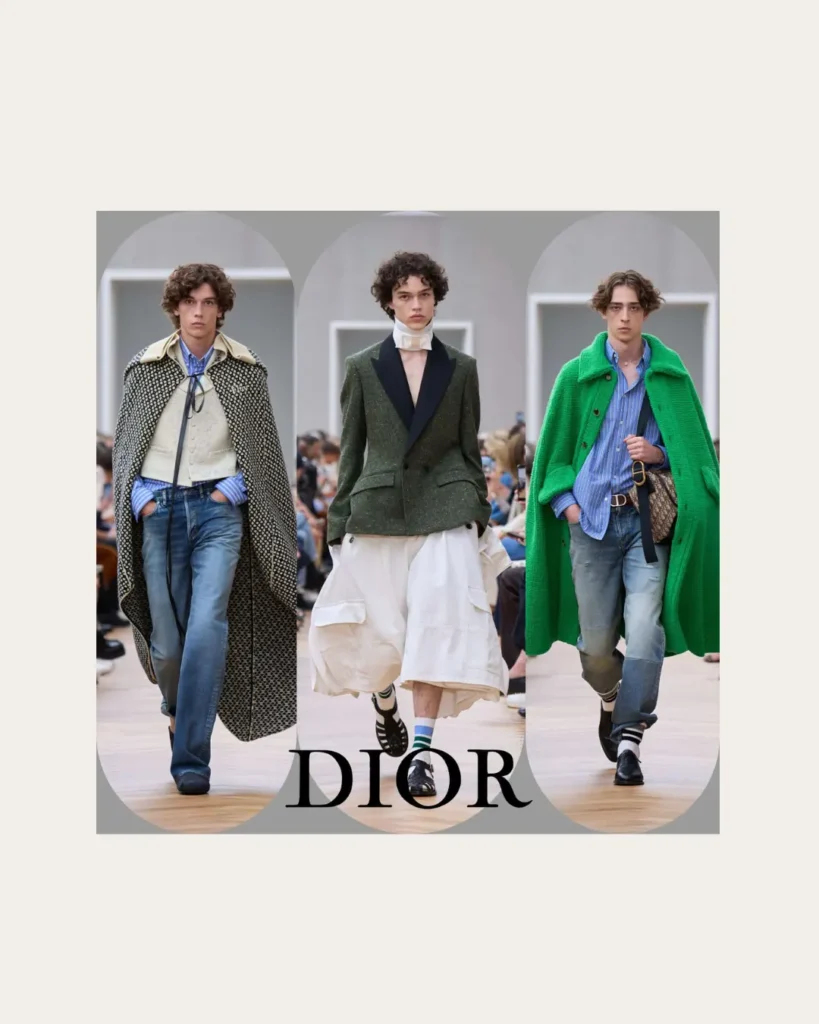
In an era where luxury fashion often equates visibility with value, Jonathan Anderson Dior offers a counterpoint. Rather than competing for attention through scale, spectacle, or provocation, the work relies on proportion, texture, and intent. Every choice appears considered, edited, and deliberate.
This restraint does not signal caution. Instead, it reflects confidence. Anderson trusts the audience to look closely, to notice the way materials interact with form, and to appreciate nuance over immediacy. As a result, the collections feel less performative and more conversational. They invite engagement rather than demand reaction.
Moreover, this strategy restores a sense of intimacy between the house and its audience. The clothing does not overwhelm the wearer. It supports them.
Heritage Without Nostalgia
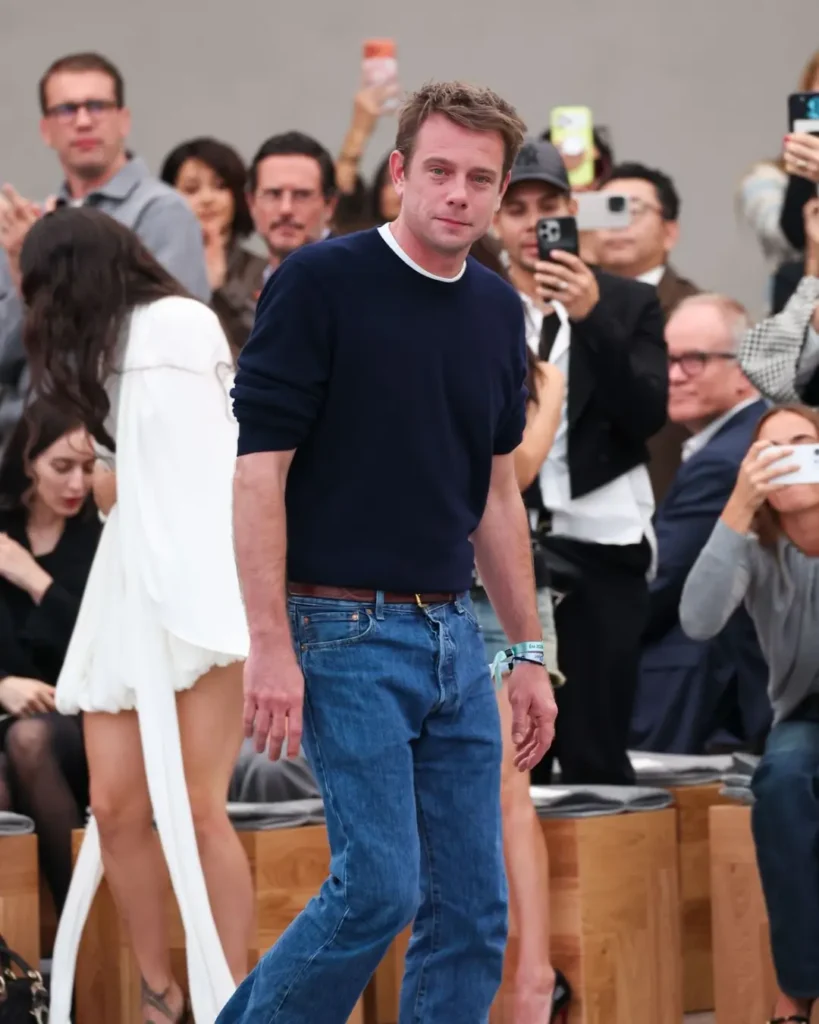
One of the most compelling aspects of Jonathan Anderson Dior lies in how heritage is treated. Rather than leaning on nostalgia, Anderson positions history as a flexible resource. Dior’s past becomes a reference point, not a constraint.
Silhouettes hint at tradition but refuse to replicate it. Details nod to archival language while allowing room for disruption. As a result, the work feels grounded without becoming retrospective. It acknowledges where the house comes from, yet it remains focused on where it can go.
This balance matters. In luxury fashion, nostalgia often becomes a shortcut. Anderson avoids that trap by treating memory as material rather than mythology.
Innovation Without Noise
While Anderson is widely known for experimentation at Loewe, his approach at Dior feels more measured. Innovation appears through subtle shifts rather than overt gestures. Fabric choices, proportions, and styling decisions introduce freshness without breaking continuity.
Read Also: Jonathan Anderson (fashion designer)
Consequently, the collections avoid the fatigue that often follows aggressive reinvention. Instead of chasing novelty, Jonathan Anderson Dior emphasizes longevity. The pieces feel designed to live beyond a single season, both aesthetically and emotionally.
This quiet innovation aligns closely with the current evolution of luxury itself. Today’s consumers increasingly value clarity, coherence, and intention. Anderson’s Dior speaks directly to that shift.
A Dialogue Between Play and Discipline

Despite the restraint, play remains essential. Anderson allows moments of whimsy to interrupt formality, preventing the collections from becoming overly serious. However, this play never overwhelms discipline. It exists within structure, not against it.
This tension creates energy. The clothes feel alive, capable of movement and personality, while still retaining elegance. That balance reflects a deeper understanding of modern luxury, where freedom and control coexist rather than compete.
Read Also: JANVIER Melaju Collection Debuts Bold Indonesian Tailoring
Why Jonathan Anderson Dior Feels Relevant Now
Jonathan Anderson Dior arrives at a moment when the fashion industry is reassessing its priorities. After years of acceleration, audiences are increasingly fatigued by constant reinvention. In response, Dior under Anderson offers something calmer and more sustainable: continuity without stagnation.
Rather than asking why Dior should change, Anderson asks how it can evolve without losing itself. That question shapes every decision. The result feels thoughtful, credible, and emotionally resonant.
Furthermore, this direction positions Dior not as a house chasing relevance, but as one confident enough to define it quietly.
Continuity as Confidence
Ultimately, Jonathan Anderson Dior succeeds because it understands that continuity is not the absence of change. It is change guided by memory, discipline, and intent. Innovation does not disappear; it simply stops shouting.
In doing so, Anderson reframes Dior for a contemporary audience that values meaning over magnitude. The house remains grounded in its legacy, yet it feels open, curious, and responsive.
This is not reinvention for attention. It is refinement with purpose.
And in a landscape saturated with noise, that choice feels not only refreshing, but necessary.


