












































































































































































































































































































































































































Glodok Chinatown Jakarta: A Living Heritage That Refuses to Fade


Glodok Chinatown Jakarta is not a relic frozen in time. It is a living neighborhood—layered, resilient, and deeply human—where history does not sit quietly behind glass but moves through narrow alleys, market stalls, temples, and kopitiams every single day. While Jakarta grows upward with glass towers and outward with new districts, Glodok grows inward, carrying memory as part of its daily rhythm.
Located in the heart of Jakarta’s old city, Glodok remains the cultural backbone of Chinese-Peranakan life in the capital. Its endurance does not come from grandeur or preservation projects alone, but from continuity—commerce that survives generations, food that tastes the same decade after decade, and rituals that never stopped, even when the city changed around them.
The Enduring Identity of Glodok Chinatown Jakarta
Unlike curated heritage zones, Glodok Chinatown Jakarta thrives on everyday activity. Metal shutters roll up at dawn. Incense smoke drifts from temples. The scent of frying oil mixes with dried herbs and medicinal roots. These details form a quiet choreography that has repeated itself for generations.
Glodok’s strength lies in repetition. Gold shops, herbal apothecaries, hardware stores, and food stalls continue to operate not as attractions, but as necessities. This is not nostalgia—it is lived culture.
The Golden Chaos of the 1990s
To understand Glodok today, one must revisit its peak in the 1990s. At that time, Glodok Chinatown Jakarta was the epicenter of electronics culture long before megamalls dominated the city. Rows of VCD shops, cassette tape sellers, early computer parts, and game arcades filled the area with restless energy.
Weekends meant crowded sidewalks and ritualized food journeys. Families lined up for dim sum, snacks, and sweets that tasted exactly as they had for years. Kopitiams were filled with elderly men playing Chinese chess from morning until dusk, while shopkeepers recognized customers by face, not by transaction history.
Even during periods of political tension, Glodok endured quietly. Food, trade, and identity fused into a daily act of cultural persistence.
When the City Looked Elsewhere
As Jakarta entered the 2000s, attention shifted. Shopping malls offered air-conditioned comfort, international brands, and digital convenience. Many predicted Glodok Chinatown Jakarta would slowly fade—either abandoned or preserved only as a memory.
Instead, Glodok adapted.
Traditional businesses held their ground while subtle changes layered themselves in. Historic spaces like Pantjoran Tea House reclaimed their narratives. Temples such as Vihara Dharma Bhakti continued uninterrupted rituals, anchoring the neighborhood spiritually.
What emerged was not a sanitized district, but a hybrid environment—where handwritten signs coexist with QR payments, and old tiles sit beside LED menus. The texture remained real.
A Cultural Reawakening Among Younger Generations
From the 2010s onward, Glodok Chinatown Jakarta experienced a quiet return. Younger Chinese-Indonesians—many raised far from the old city—came back not out of obligation, but curiosity and pride.
Food became the gateway. Legendary names like Kopi Es Tak Kie, Gado-Gado Direksi, Soto Kudus Kwangtung, and countless Petak Sembilan stalls transformed from “old places” into cultural landmarks. Recipes predating independence gained renewed appreciation.
Social media reframed Glodok’s cluttered visuals as authenticity. What was once dismissed as chaotic became celebrated as character.
Beyond a Marketplace: Glodok as a Cultural Canvas
Today, Glodok Chinatown Jakarta extends beyond commerce. Architecture enthusiasts trace colonial shophouse facades. Cultural tours explore layers of Hokkien, Teochew, Peranakan, Betawi, and Dutch influences compressed into a dense grid of streets.
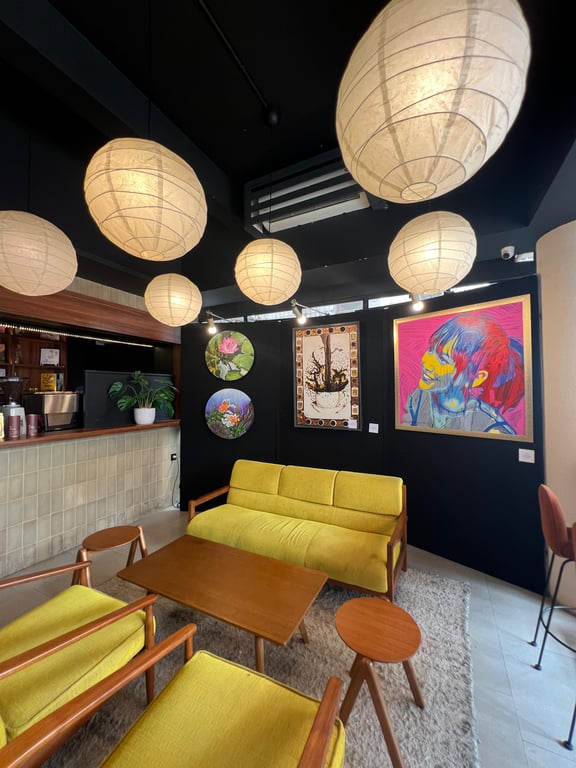
Photography walks turn faded signage and hanging lanterns into visual narratives. Creatives reimagine abandoned upper floors as studios and cafés—without erasing the life below. The area evolves without losing its voice.
Glodok Today: A Living Museum
Modern Glodok functions like a living museum—one that refuses silence. Visitors can sip tea at Pantjoran, navigate the sensory overload of Petak Sembilan, explore refurbished shophouses, or sit in kopitiams where time feels slower than the rest of Jakarta.
Here, history is not preserved—it is practiced.
Preservation Without Sanitization
The future of Glodok Chinatown Jakarta does not lie in over-polishing. Its value exists in contradiction: decay and renewal, tradition and innovation, memory and momentum.
Glodok matters because it reflects Jakarta itself—a city negotiating between what it was and what it wants to become. Progress here does not mean replacement. It means continuity through use.
Between lanterns, temples, herbal medicine, and the comforting aroma of frying oil, Glodok continues to breathe.
And against all odds, it refuses to fade.

